
Transcript
Announcer:
Welcome to CE on ReachMD. This activity is provided by Medtelligence. This episode is part of our MinuteCE curriculum.
Prior to beginning the activity, please be sure to review the faculty and commercial support disclosure statements as well as the learning objectives.
Dr. Tesar:
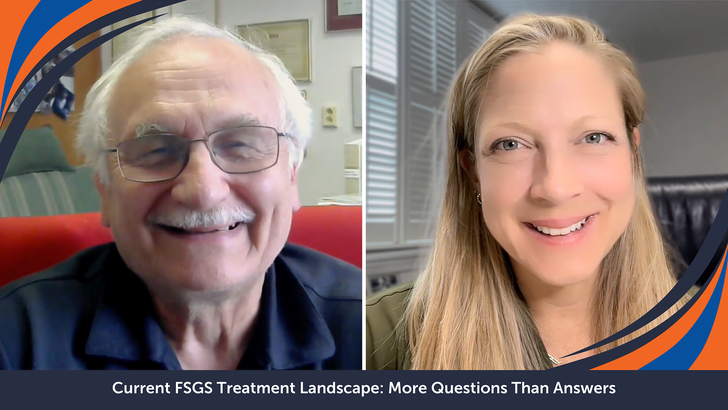
This is CE on ReachMD. I am Dr. Vladimir Tesar, and I'm joined by Dr. Meghan Sise. Today, we are going to be discussing therapies that are currently used to help manage patients with FSGS.
In the beginning, I would like to stress that we have no approved licensed therapy for FSGS. We use, of course, RAAS inhibition and also there are some data on systemic corticosteroids or other immunosuppressants such as calcineurin inhibitors, but they have limited efficacy and the treatment is associated with sometimes severe adverse events. So there is a great unmet need for new treatment.
We have many therapies, some of them are dedicated to symptoms of FSGS, such as sodium restriction. Some of them try to slow down the progression of CKD, such as RAAS inhibition, or some kinds of immunosuppressive treatment, such as systemic corticosteroids or calcineurin inhibitors. And of course, when the patient develops end-stage kidney disease, they can be transplanted, but there is a great risk of recurrence of the disease. And the response of recurrence to treatment occurs only in part of the patients, and those patients who do not respond have a higher risk of graft failure.
There are certainly some benefits as well as some limitations when using these therapies to help treat patients with FSGS.
Dr. Sise:
Yeah, I think it's important to note that treatment responses are very variable. Some patients respond to immunosuppressive therapies like corticosteroids or, if they fail corticosteroids, calcineurin inhibitors and other immunosuppressants, and some do not respond to immunosuppressive therapy. Either way, side effects are extremely common with immunosuppressive therapies. Corticosteroids not only decrease your immune system and so therefore put you at risk of infection, but they also have important metabolic side effects like weight gain, diabetes, osteoporosis, and they can lead to fluid retention, congestive heart failure, gastric ulcers, and these can be very serious in some cases.
Calcineurin inhibitors, when used for a prolonged period of time, can lead to hypertension and they themselves are actually nephrotoxic. So these trade-offs can be serious. And again, despite these therapies, not all patients will respond.
When we think about the supportive care treatments such as renin-angiotensin-aldosterone system blockade and diuretics, these treatments may decrease proteinuria in some patients. But many patients will still have progressive GFR decline and progress to kidney failure despite maximum supportive care. So there definitely exists an enormous unmet need in the FSGS population for targeted treatments that are safer with less side effects.
Dr. Tesar:
Dr. Sise, thanks for this very nice and concise overview. I feel that there is a limited efficacy and definitely unmet need because of also high rate of adverse events and poor tolerance of the current treatment. Is it the case?
Dr. Sise:
Yes, I totally agree. We have many patients that are young, and putting them on treatments that have this many side effects can be a real challenge.
So there are no FDA-approved treatments for focal segmental glomerulosclerosis, and there's a large unmet need because of these suboptimal responses to the current standard of care for new therapies that target disease mechanisms and are safe for the patients who have FSGS.
Dr. Tesar:
Several years ago, we looked at systematic review of the studies with the traditional treatments, including renin-angiotensin-aldosterone inhibition and also immunosuppressive treatment, and it is clearly demonstrated that there is a positive impact of this treatment on proteinuria. There is a decrease of protein by about 30% with the inhibition of renin-angiotensin system, and maybe even more with corticosteroid treatment.
But what remains very uncertain and poorly documented is long-term effect of all these treatments on the rate of loss of eGFR and the risk of end-stage kidney disease.
Well, this has been a great discussion. Thank you very much once again for joining me and thank you to our audience for listening today.
Announcer:
You have been listening to CE on ReachMD. This activity is provided by Medtelligence and is part of our MinuteCE curriculum.
To receive your free CE credit, or to download this activity, go to ReachMD.com/CME. Thank you for listening.

